
The ISOSCAN winter 2026 campaign has now ended. If you have a kit that you collected in 2025 or 2026 which you still need to return, please email post.isoscan@uib.no.
What happens to the samples after they are returned?
Once you return the ISOSCANer kit with a sample you have collected, it will be taken to a laboratory at the University of Bergen where it will be analysed. This will take several weeks. The returned kits are collected, transported and analysed in bulk to conserve resources and reduce transport emissions.
Once at the lab, the melted snow from the tubes will go through automated water stable isotope sampling equipment, which measures the amount of light and heavy water molecules in the sample. This provides information about how far the sample has travelled across the ocean and into the mountains.
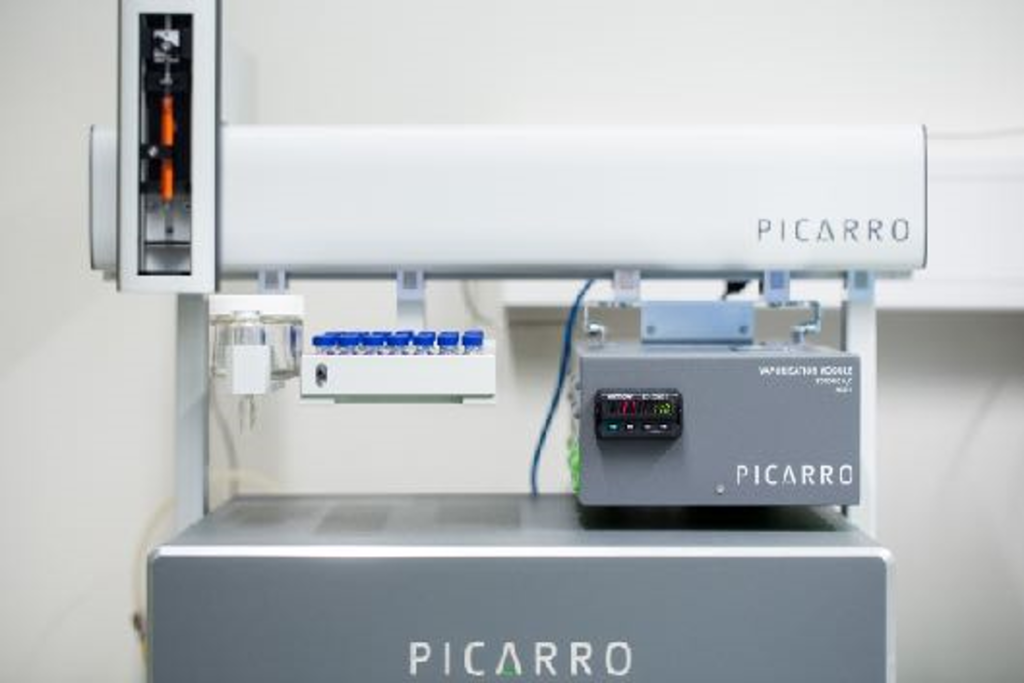
A photo of the automated sampling equipment for stable water isotopes in the laboratory at the University of Bergen.
During testing of the ISOSCAN kit in 2025, we received and analysed 42 samples. You can view the results here.
After several hundred snow samples have been collected over a number of years, the data will be shared with researchers around the world and combined with data from other locations in Scandinavia to create better prediction models of the water cycle. Once these models are created, they can predict weather and water events with only a limited number of observations.